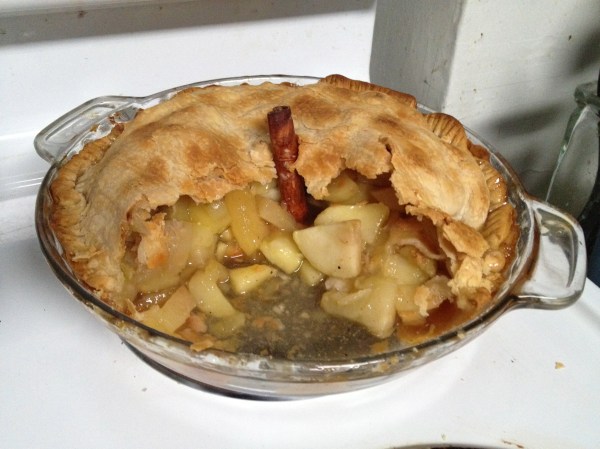
Fun with band-aids

Unlike our previous posts, this is simply a fun observation. I knew about the wintergreen-life-savers-in-the-dark trick, but I learned this morning that pulling open a band-aid wrapper produces a beautiful bluish glow for similar reasons. This lovely light production is due to triboluminescence, and I likely only noticed because I was too lazy to turn on the bathroom light this morning.

The blue color is due to excited nitrogen in the air. In theory, opening a band-aid wrapper should produce a different color if you could open a band-aid under an atmosphere with a different dominant gas. The air we breathe is 78% Nitrogen, which is why the glow is due to that gas, but if we could change the proportions to have a different dominant gas, other colors might be possible  similarly to why auroras can be different colors!

Below is a video showing this effect if you aren’t inclined to open band-aids simply for the fun of it:

Cheers!

Frozen vs. Fresh Rib-eye Steak

In honour of my co-blogger finishing her dissertation we’re doing science to delicious steaks.

Initial observation:
Grocery stores sell both frozen and fresh versions of some cuts of meat with the frozen versions often being much cheaper than the same cuts fresh.  For this study we will focus on rib-eye steaks.

Question:
Is there a difference between fresh and frozen meat?

Continue reading

A note on pie plates

I have always assumed that pie plate labeling was relatively straight forward, with only one dimension (the diameter) generally being given on the label. The main exception is if the plate/pan is of the deep-dish variety, in which case the depth is often given as well. However, standing in the dreaded Walmart, trying to find a pair of pie pans for the Pi-day pie crust experiment, I noticed something a bit peculiar; pie vessels that claimed to be the same size, did not appear to be the same size.

Continue reading

A hot cup of tea

There are times when you can look back, and recognize the folly of your relative youth. Times when you didn’t realize the fleetingness of existence and proceeded with your life, careless that the world around you may forever change. In particular, pertinent to this day and this post, I keep kicking myself for passing up a chance to see Douglas Adams when he came to speak at my university. That was April 25, 2001. He died May 11, 2001 of a heart attack. I had thought to myself, that surely, I would have a chance to hear this great man again, and that missing this one university event wouldn’t matter too much to me.

So. To honor the anniversary of the birth of Douglas Adams, our first science experiment regards, in part, the thermal properties of a cup of tea.

Continue reading

Philosophy Statement

i.e. what the heck is this blog, and what are we doing here?

Let’s start with a definition.

Science: noun. “the intellectual and practical activity encompassing the systematic study of the structure and behavior of the physical and natural world through observation and experiment”. (New Oxford American Dictionary)

We, your blog writers, are scientists. We interact with the world through a scientific lens. If we have a question about something, and it is in our capacity to do so, we test it. After doing this for fun, for ourselves, a friend demanded that we start a blog for her entertainment. And really, why not? Through the course of doing an experiment, which we would have done anyway, we have already done most of the work.

So, gentlefolk, the purpose of this nook of the interweb is to chronicle our experiments regarding the world around us. Hopefully it will entertain, educate, and spur more people to investigate the world around them in scientific fashion.

Cheers!