When making a martini, shaking with ice is a common technique to mix the ingredients. This has two easily measurable effects. The first is that the martini is cooled by the melting of ice. The second is that this melting dilutes the martini. The melting of ice seems to occur even if the gin and the ice are the same temperature initially.
Orange Liqueur versus the Brownies
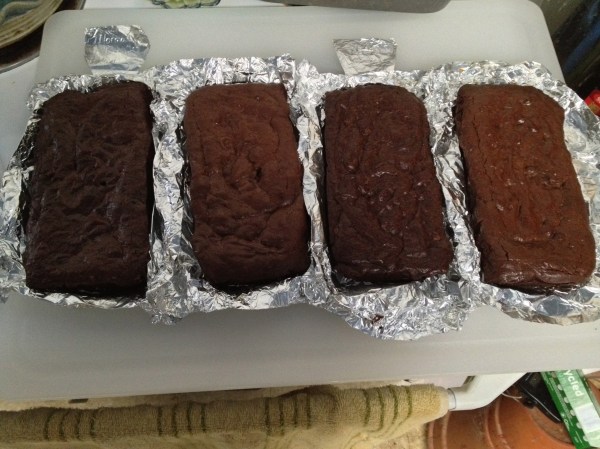
Orange liqueurs are reported to have differing properties, but tend to be similar enough to only require a single bottle per collection. The collection at the Secondary Testing Facility recently had its bottle of Grand Marnier supplemented with a bottle of Cointreau, adding comparative liqueurs to our potential fields of study. For our first foray into the realm of citrusy alcohol science, we consider a simple question: which produces a better brownie, Grand Marnier or Cointreau?
Snow to Boiling

Drip-pan or Reflector? What is the purpose of the under-element pans on the stove? In the spirit of science, and wanting the snow to go away, we will run some tests to see how long it takes to go from snow to boiling with both old and new “drip pans”.
Qualitative assessment of chicken breasts
For some reason, we ended up with a large number of chicken breasts in the house over the weekend. Not to waste the opportunity, we did additional science to them.
Breast Size Measurement via Archimedes’ Principle
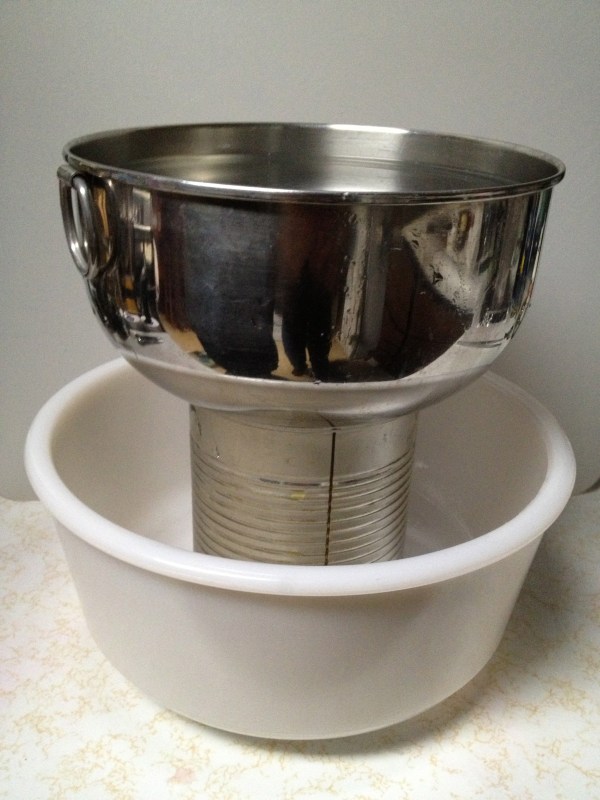
Breasts come in a wide variety of sizes, and due to their shape, are difficult to accurately measure to determine their actual sizes. In this study we will use Archimedes’ Principle, which uses the displacement of water, to measure the sizes of both natural breasts and augmented breasts.
Continue reading
Egg-speriments

’tis the season of hard cooked eggs in the shell, and there seems to be a variety of cooking methods! Now, if the main recognized purpose is festive food coloring, the insides don’t matter too much. However, if anyone other than the resident pet is going to eat them, perhaps there is a “best” method?
Fun with band-aids
Unlike our previous posts, this is simply a fun observation. I knew about the wintergreen-life-savers-in-the-dark trick, but I learned this morning that pulling open a band-aid wrapper produces a beautiful bluish glow for similar reasons. This lovely light production is due to triboluminescence, and I likely only noticed because I was too lazy to turn on the bathroom light this morning.
The blue color is due to excited nitrogen in the air. In theory, opening a band-aid wrapper should produce a different color if you could open a band-aid under an atmosphere with a different dominant gas. The air we breathe is 78% Nitrogen, which is why the glow is due to that gas, but if we could change the proportions to have a different dominant gas, other colors might be possible similarly to why auroras can be different colors!
Below is a video showing this effect if you aren’t inclined to open band-aids simply for the fun of it:
Cheers!
Frozen vs. Fresh Rib-eye Steak

In honour of my co-blogger finishing her dissertation we’re doing science to delicious steaks.
Initial observation:
Grocery stores sell both frozen and fresh versions of some cuts of meat with the frozen versions often being much cheaper than the same cuts fresh. For this study we will focus on rib-eye steaks.
Question:
Is there a difference between fresh and frozen meat?
A note on pie plates
I have always assumed that pie plate labeling was relatively straight forward, with only one dimension (the diameter) generally being given on the label. The main exception is if the plate/pan is of the deep-dish variety, in which case the depth is often given as well. However, standing in the dreaded Walmart, trying to find a pair of pie pans for the Pi-day pie crust experiment, I noticed something a bit peculiar; pie vessels that claimed to be the same size, did not appear to be the same size.
Green things!
Many things are dyed green in honors of Saint Patrick’s day, and here we will (casually) examine the best method for turning Irish Whiskey green.
 Doing Science To Stuff